

Wills in Ontario
What Seniors in the Bay of Quinte Need to Know Before Downsizing
Anette Targowski
12/3/20252 min read
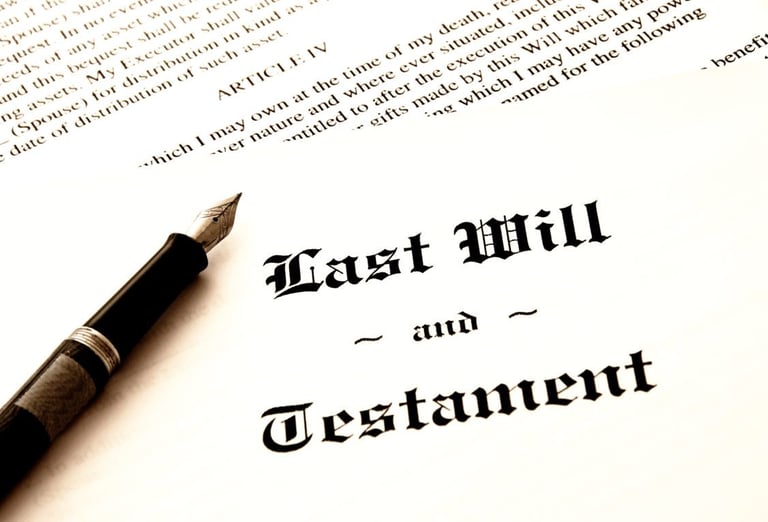
When preparing to downsize in the Bay of Quinte, reviewing your will is one of the most important steps you can take. Many people assume their will only needs to be updated after they move, but in reality, your will should be updated twice: once before you begin downsizing, and once again after it’s complete. This ensures your executor has clarity, your beneficiaries are protected, and your intentions are legally understood.
In Ontario, there are three types of wills: lawyer-drafted wills, witnessed wills, and holograph (handwritten) wills. Although all three can be legally valid, they are not equal in reliability. Lawyer-drafted wills are the gold standard. They are clear, legally strong, and far less likely to lead to confusion, conflict, or costly delays. Witnessed wills — wills that you create yourself and have two witnesses sign — are valid when executed correctly, but they are often prepared with mistakes such as missing signatures, beneficiaries acting as witnesses, or unclear instructions.
The most problematic wills are holograph wills — handwritten wills with no witnesses. While they are legal in Ontario, they frequently create estate disasters. They tend to be vague, incomplete, or open to misinterpretation. Executors often struggle to prove authenticity or determine exactly what the writer intended. These issues lead to delays, legal fees, and unnecessary stress for grieving families.
Another common problem with handwritten wills is the absence of a revocation clause. This is a short sentence in a new will that states:
“I revoke all prior wills and codicils.”
In simple terms, it cancels every previous will you’ve ever written.
Without a revocation clause, an old handwritten will tucked into a drawer — found during downsizing — can suddenly compete with your newer will. This can leave your executor trying to interpret two different sets of instructions, causing confusion or even legal disputes. Lawyer-drafted wills almost always include a revocation clause, which is one reason why professional preparation is so valuable.
When downsizing, a will should be updated twice. The first update happens before you begin sorting so your executor understands your intentions while all your belongings still exist. The second update happens afterward, once items have been sold, donated, or gifted. This prevents ademption, which occurs when a will leaves an asset to someone that no longer exists. Updating your will after downsizing ensures your instructions match reality and avoids disappointment among beneficiaries.
Your will cannot override beneficiary designations on life insurance, pensions, or RRSPs, nor can it determine what happens to jointly owned property. It also cannot authorize anyone to act on your behalf while you’re alive — that’s the role of a Power of Attorney. But a proper will does give your executor clarity and authority to carry out your wishes smoothly and respectfully.
Downsizing is the perfect opportunity to revisit your estate plans and ensure your documents are accurate. With up-to-date instructions, the right legal framework, and a clear plan, you can make your transition peaceful, organized, and easier for everyone involved.
If you’re preparing to downsize and want help understanding where to begin, I’m here to guide you.
Call or text anytime: 705-957-4177 — because stress-free downsizing starts here, with me and my team..
Ready to make your next step easier?
Share a few details and I’ll personally reach out for a free, no-obligation consultation. No pressure, no sales pitch — just honest guidance to help you move forward with confidence.
Address:
100 Bell Blvd. Unit 200
Belleville, Ontario K8P 4Y7
Cell: 705.957.4177
Home | Contact | About | Services | Probate & Estate | Wills & POA | Home & Estate Education | Blog | FAQ
Anette Targowski, REALTOR® | Senior Real Estate Specialist® (SRES®)
Not just a REALTOR® — your full downsizing team.




stress-free DOWNSIZING starts here, with me and my team!